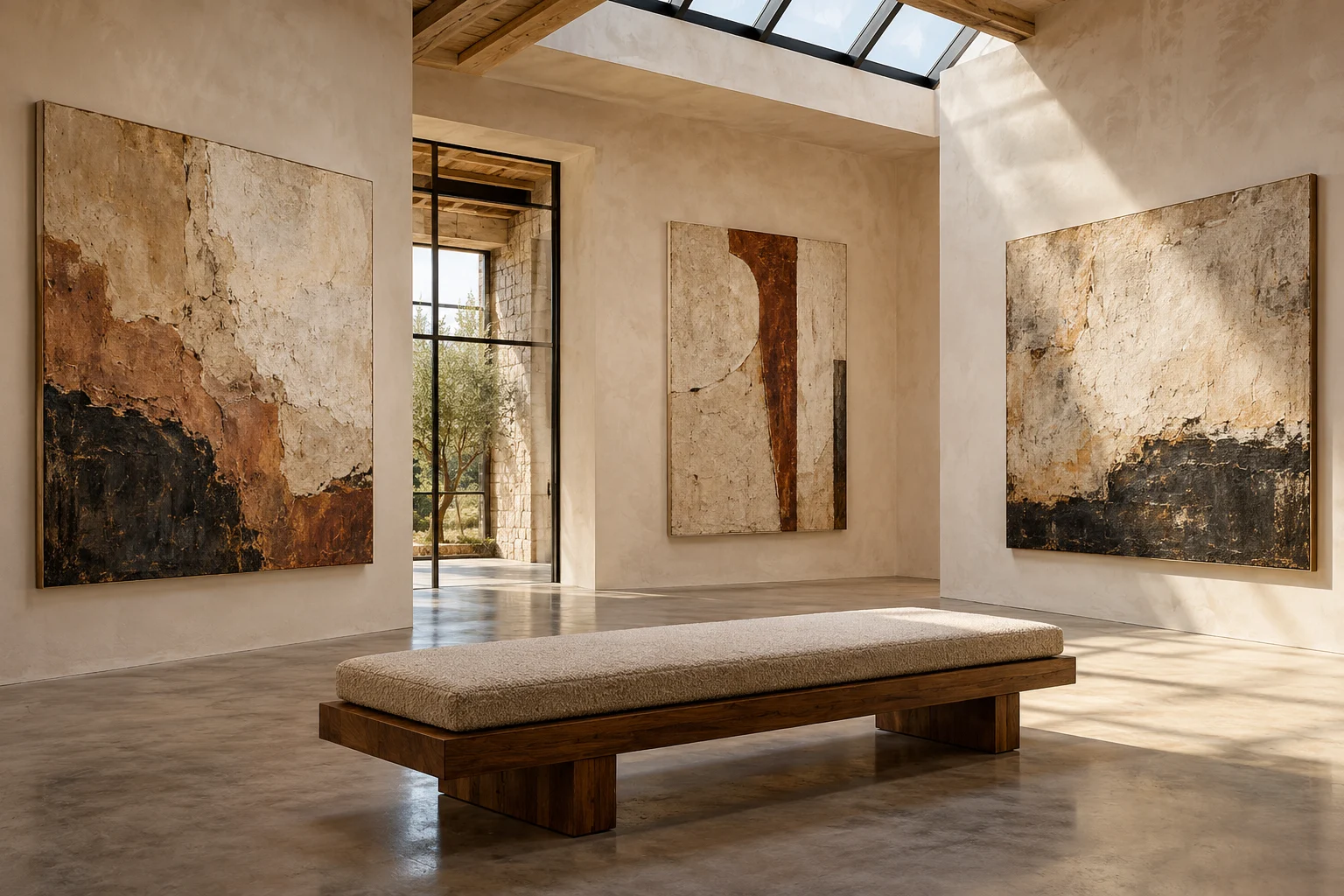
A jagged line of cobalt blue cuts across a canvas of textured white. A heavy bronze sculpture sits in the center of the room, its surface pitted and uneven, catching the light in small, sharp glints. These are the immediate, sensory truths of an art gallery. You see the color, feel the implied weight, and notice the way the shapes occupy the space around you.
The Gap Between Sight and Statement
Often, a small card hangs beside the work, offering a written explanation from the creator. It might speak of existential tension, the passage of time, or a specific cultural memory. This is where a tension arises for the viewer. There is a temptation to weigh your immediate, visceral reaction against the artist’s stated intent. If the artist says the piece is about peace, but you find the sharp edges unsettling, you might feel you have missed the point.
However, the observation you make—that the piece feels restless or aggressive—is a valid response to the physical object in front of you. The creator’s explanation provides a different perspective, but it does not invalidate your own. The art exists in the space between the object and the person looking at it.
The Pressure of the Busy Schedule
For many Texans, finding the mental bandwidth for a gallery visit is a challenge. You might be balancing a demanding project at the office with the logistics of school pickups, grocery runs, and maintaining a household. When you finally step into a quiet exhibition, the last thing you want is the cognitive load of trying to 'solve' a painting like it is a complex work email or a mounting pile of laundry.
For example, if you have spent your afternoon navigating a chaotic schedule of errands and meetings, your brain is likely seeking clarity. You might walk into a gallery expecting to be enlightened, only to find yourself frustrated by an abstract installation that seems to defy logic. In these moments, the tradeoff is between the desire for intellectual stimulation and the need for simple, sensory engagement.
A Different Way to Look
Instead of treating an exhibition as a test of knowledge, consider it an exercise in observation. You can choose to engage with the work on your own terms. If a piece draws you in, stay with it. If it leaves you cold, move to the next one. There is no requirement to find a profound meaning in every corner of the room.
If you find yourself curious about how a specific technique was achieved, you might ask the gallery attendant how the artist applied those particular textures. You can also ask how the lighting in the room was chosen to highlight certain aspects of the collection. By shifting the focus from 'What does this mean?' to 'What am I seeing?', the gallery becomes a place of rest rather than another task on a crowded to-do list.